Putting In A Chimney Vent Installation
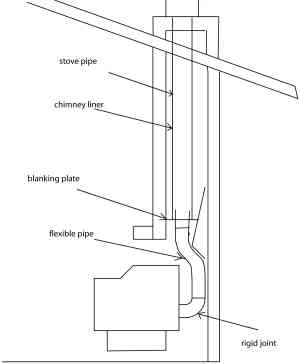 If you're considering a chimney vent installation, the first thing to do is check the condition of your chimney. Have it swept or sweep it yourself, get a powerful light source, and have a look. Perhaps you don't want to put your head up the chimney? Get a mirror and shine the light on it so that the beam goes up the chimney. You will be able to see what's going on in the mirror.
You'll be looking for obstructions, combustible deposits or cracked brickwork that is out of line.
If a lot of masonry debris came down when the chimney was swept, you will need either a chimney liner or a full length pellet stove vent pipe.
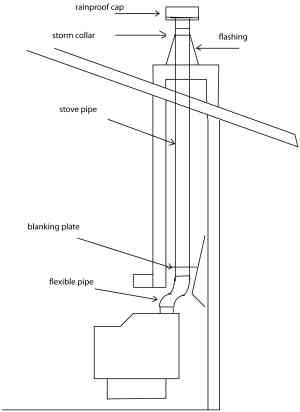
If all is good, you can run a short length of stove vent pipe through a blanking plate made of steel or other non-combustible sheet.
Most pellet stove manufacturers no longer recommend using a short connection to a chimney without a liner because of the difficulties of thoroughly cleaning the vent once the stove is installed.
If your chimney already has a liner, ensure that it is of an adequate size for your stove. All pellet stoves require a rainproof cap at the top.
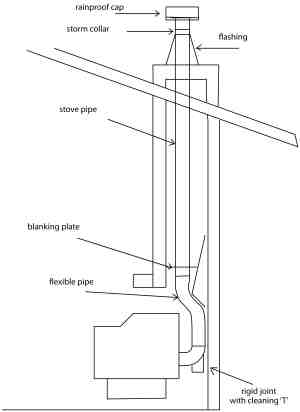
Full Length Pellet Stove Vent
This is the best way to put in a chimney vent installation. The internal condition of the chimney will not be a cause for concern. When measuring the length, allow the vent pipe to protrude 14ins. above the top of the masonry.If the run of the chimney is not straight, appropriate lengths of flexible stainless steel pipe will be needed in the run.
When installing the vent from the back of the stove, a clean out 'T' will be required which must have its own support bracket attached to the rear of the pellet stove.
Pages Related to Chimney Vent Installation
Vertical Venting Horizontal Venting Three Or Four Inch Venting? Pellet Stove Pipe Selkirk Pellet Stove Pipe Hearth Pad


Popular Pages
Small Stoves Installing Simple Venting Comparison Battery Backup Accessories Hearths and Hearth Pads Problems Cleaning Ash Vacuums Thelin Gnome Non Electric Pellet Stoves Jamestown J1000 Wood Pellet Machines
